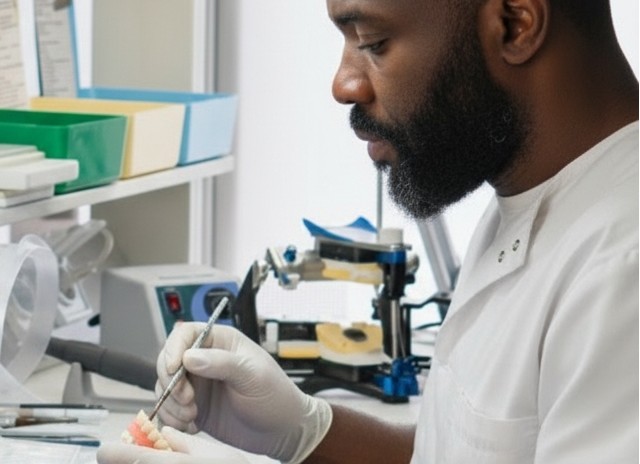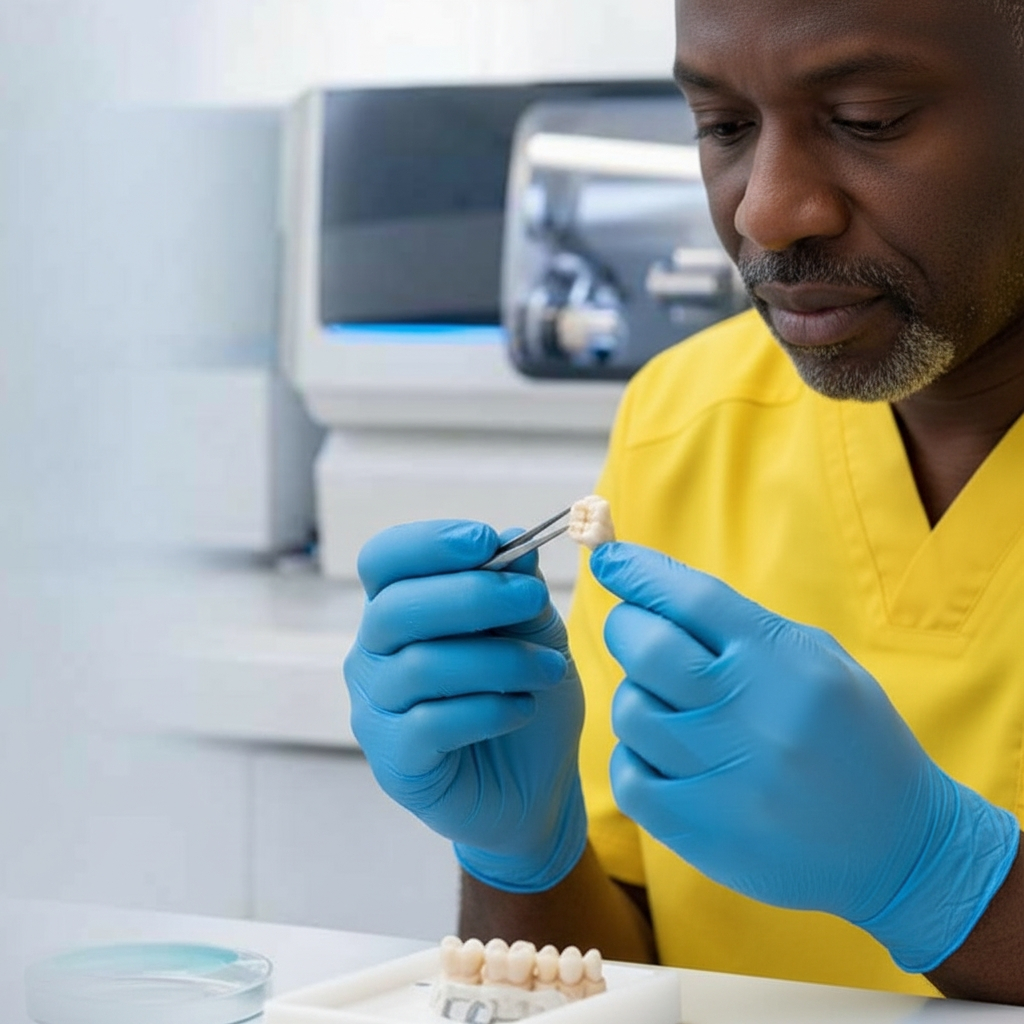
When a denture cracks, loses a tooth or suddenly becomes uncomfortable, waiting several days for help can disrupt eating, speaking and everyday confidence. Same-day denture repairs in Jacksonville may be available at Quality Dentures & Implants for suitable cases, supported by an in-house dental lab and technicians who can assess repairs, adjustments and relines on site.
Same-day service depends on the damage and when the denture is received, so contacting the practice as early as possible is important.
Quality Dentures & Implants can complete many suitable denture repairs on the same day through its Jacksonville in-house lab. Cracks, missing denture teeth and some fit concerns may be repairable without replacing the complete denture. Loose dentures may require adjustment or relining rather than a structural repair.
What Counts as an Urgent Denture Problem?
A denture problem is urgent when it prevents you from using the appliance safely or comfortably.
Contact the practice promptly if you notice:
- A visible crack in the denture base
- A denture broken into two or more pieces
- A loose or missing denture tooth
- A sharp edge cutting your tongue or gums
- Sudden instability while eating
- Significant rubbing or pressure
- A clasp that has broken on a partial denture
- A sudden change in your bite
- A previous repair beginning to separate
Continuing to wear a damaged denture may enlarge the fracture, irritate your mouth or place uneven pressure on the appliance.
Remove it if wearing it is painful or unsafe, and contact the dental team for instructions.
What Should You Do When a Denture Breaks?
What you do immediately after the damage can affect whether the denture can be repaired efficiently.
Follow these six steps
- Remove the denture carefully.
- Find and retain every broken section or loose tooth.
- Place the pieces in a clean, secure container.
- Do not glue or tape them together.
- Avoid filing sharp areas or bending metal clasps.
- Call Quality Dentures & Implants and explain what happened.
Tell the team whether it is a full or partial denture, how it broke and whether you are experiencing pain or injury.
Arriving early can provide the lab with more time to assess and complete suitable same-day work.
Which Denture Repairs May Be Completed the Same Day?
Many everyday denture problems may be repairable without manufacturing an entirely new appliance.
Possible same-day work can include:
- Repairing a straightforward crack
- Rejoining suitable broken sections
- Replacing a denture tooth
- Securing a loose denture tooth
- Smoothing a sharp or rough area
- Making certain fit adjustments
- Completing some relining procedures
This is not a guarantee that every denture can be returned the same day. The technician first needs to consider:
- The extent and location of the damage
- Whether pieces are missing
- Whether the denture has become distorted
- The age and condition of its materials
- Whether it has broken previously
- Whether poor fit or bite pressure caused the failure
- The complexity of the required laboratory work
Quality Dentures & Implants advises that many repairs may be completed the same day when the denture is brought to the practice by 9:00 am. Patients should confirm availability directly when arranging an appointment.
What Happens During a Professional Denture Repair?
Step 1: The denture and your mouth are assessed
The team examines both the visible damage and the denture’s fit. This helps identify whether the fracture was accidental or caused by an underlying problem.
Step 2: The repair approach is explained
You will be told whether the denture can be repaired, whether additional treatment is advisable and how long the work is expected to take.
Step 3: The lab technicians complete the work
The denture is transferred to the in-house lab. The damaged areas are prepared, accurately repositioned and repaired using appropriate dental materials and laboratory processes.
Step 4: The repaired denture is finished
The appliance is shaped, finished and polished as required. Rough surfaces and excess repair material must be removed before it is returned to the mouth.
Step 5: Fit and bite are checked
The repaired denture is tried in so the team can check comfort, stability and how the teeth meet. Further adjustment may be made where appropriate.
This final clinical check is an important difference between professional treatment and a home repair.
Is a Loose Denture Broken?
Not necessarily. A denture can remain structurally intact while becoming loose because the shape of the gums and jaw has changed.
Signs of lost fit include:
- Rocking while chewing
- Lifting during speech
- Food collecting underneath
- Recurring sore spots
- Clicking sounds
- Needing increasing amounts of adhesive
- Loss of confidence when laughing or speaking
Repairing the denture base will not correct these problems if there is no fracture. The appropriate treatment may instead be an adjustment or reline.
How Does Denture Relining Improve the Fit?
A denture reline adds new material to the internal surface resting against the gums. This updates the fit while retaining the denture’s existing teeth and main structure.
Relining may be suitable when:
- The denture is generally in good condition
- Its teeth are not excessively worn
- The bite remains acceptable
- The main concern is looseness
- The gums and oral tissues are suitable for treatment
A reline can be more affordable than replacing a serviceable denture, but it cannot correct every problem. A badly worn, repeatedly fractured or significantly misaligned denture may need replacement.
Repair, Adjustment or Reline: Which One Do You Need?
| Problem | Possible treatment |
|---|---|
| Cracked or fractured denture base | Professional repair |
| Denture tooth has fallen out | Tooth replacement and repair |
| One small area rubs the gum | Adjustment |
| Whole denture has become loose | Reline assessment |
| Repeated cracks in the same area | Fit, bite and replacement assessment |
| Badly worn teeth and poor bite | New denture may be recommended |
This table provides a general guide only. Several problems can occur together, so the final recommendation must follow an examination.
Why Are DIY Denture Repairs Risky?
It is tempting to use household glue when a denture breaks before work, a meal or an important event. Unfortunately, a quick home repair can create a much larger problem.
DIY repairs may:
- Hold the broken sections in the wrong position
- Change the bite
- Create sharp or uneven edges
- Contaminate the repair surfaces
- Irritate the mouth
- Use materials not intended for oral contact
- Make professional repair more difficult
- Permanently damage the denture
Never place household adhesive on your denture. Keep all pieces and bring them to the practice so the lab technician can assess them properly.
When Is Repairing a Denture No Longer Economical?
Professional repair can extend the useful life of an otherwise sound denture. However, repeatedly fixing an appliance that no longer fits may not provide good value.
Replacement may be more economical when:
- The denture has broken several times
- Its teeth are substantially worn
- The base has become thin or distorted
- Your bite no longer functions correctly
- The denture is very loose
- There have been significant changes in your mouth
- Appearance and facial support have deteriorated
- A lasting repair cannot be completed
Rather than simply fixing the visible crack, the team should look for the reason it occurred. This can help prevent an immediate repeat failure.
How Can You Reduce the Risk of Future Breakage?
Accidents cannot always be prevented, but careful handling makes a difference.
- Clean the denture over a folded towel or basin containing water
- Never use boiling or very hot water
- Store it safely away from children and pets
- Do not wrap it in tissue, where it may be discarded
- Avoid biting objects or using the denture as a tool
- Do not adjust clasps yourself
- Arrange an assessment when the denture becomes loose
- Attend recommended checks even when there is no pain
A denture that begins rocking can experience uneven stress. Early adjustment or relining may help protect it before a crack develops.
Get Help with a Broken or Loose Denture in Jacksonville
You rely on your dentures to eat, speak and face the day confidently. When something goes wrong, prompt access to a dental team and laboratory technician can make an enormous practical difference.
Quality Dentures & Implants provides same-day denture repairs in Jacksonville for many suitable cases, supported by an in-house lab. The team can also assess loose dentures for adjustment or relining and explain when replacement would offer better long-term value.
Contact the practice as early as possible—ideally before 9:00 am for potential same-day work—and bring every part of the damaged denture with you.
This information is general and does not replace an examination or personalised dental advice. Same-day service depends on assessment, case complexity and laboratory availability.
Frequently Asked Questions
Can my broken denture be repaired on the same day?
Many straightforward cracks, fractures and missing denture teeth may be repaired on the same day. Suitability depends on the damage, condition of the denture, time of arrival and laboratory availability.
What time should I bring my denture in for a same-day repair?
Quality Dentures & Implants advises patients to bring suitable denture repairs in by 9:00 am where possible. Contact the practice first to confirm the appointment and current availability.
Can a loose denture be repaired?
A loose denture may not be broken. It may require an adjustment or professional reline to improve its contact with the gums. An examination will determine the cause and appropriate treatment.
Should I glue my broken denture before my appointment?
No. Household glue can contaminate the denture, alter its position and make professional repair more difficult. Keep all pieces safely together and bring them to the practice without attempting a home repair.
When should a broken denture be replaced instead of repaired?
Replacement may be recommended when a denture is extensively damaged, repeatedly breaking, badly worn, distorted or unable to provide an acceptable fit and bite. The team will assess its condition before recommending treatment.