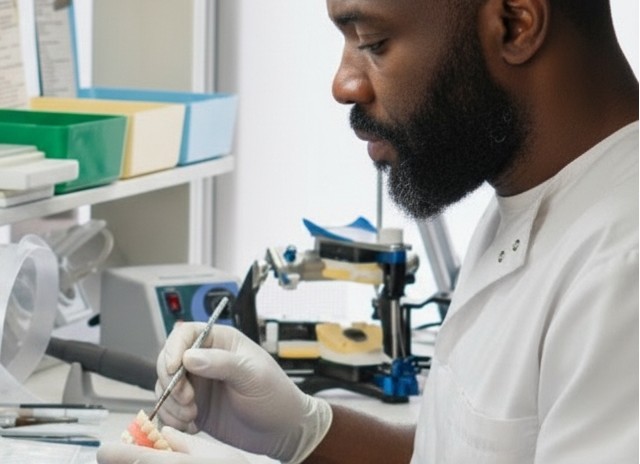
Choosing between zirconia and acrylic All-on-X teeth is an important decision for patients considering full-arch dental implants in Jacksonville, FL. Zirconia is valued for its strength, stain resistance and polished appearance, while acrylic offers a lighter, more affordable restoration that can generally be adjusted or repaired more easily.
At Quality Dentures & Implants, the right material depends on your bite, appearance goals, budget, available space and long-term treatment plan. The most expensive option is not automatically the best choice for every patient.
The Short Answer
Zirconia All-on-X teeth generally provide greater resistance to wear, staining and fractures. They can offer a highly polished, natural-looking result and may require fewer material-related repairs over time.
Acrylic teeth are usually lighter, quieter when biting and easier to modify or repair. They also tend to cost less initially.
Both materials can provide an attractive and functional full-arch restoration when they are properly designed, fitted and maintained.
What Are All-on-X Teeth Made From?
All-on-X treatment uses a carefully planned number of dental implants to support a complete upper or lower arch of replacement teeth.
The implants themselves are placed in the jawbone. The visible teeth and gum-coloured portion form the full-arch prosthesis attached to those implants.
Two common restoration options are:
Acrylic Hybrid Teeth
An acrylic hybrid restoration generally consists of acrylic or composite denture teeth and gum-coloured material supported by a metal or titanium framework.
This design has been used successfully for many years and remains a practical treatment option for suitable patients.
Zirconia Teeth
Zirconia is a strong dental ceramic that can be milled to create a full-arch restoration. Some designs are primarily monolithic zirconia, while others combine zirconia with additional materials or a supporting framework.
Zirconia restorations are known for their polished appearance, strength and resistance to everyday wear.
Zirconia vs Acrylic All-on-X Teeth at a Glance
| Consideration | Zirconia All-on-X Teeth | Acrylic All-on-X Teeth |
|---|---|---|
| Appearance | Highly polished with good colour stability | Natural-looking but may show wear or staining sooner |
| Strength | Highly resistant to wear and many types of fracture | More likely to chip, wear or require tooth replacement |
| Weight | Generally heavier | Generally lighter |
| Sound | May create a sharper sound if opposing hard teeth | Usually produces a softer biting sound |
| Stain resistance | Highly stain resistant | May gradually discolour or collect surface stains |
| Repairability | Repairs can be more complex | Usually easier and less costly to repair |
| Adjustments | More difficult to modify after completion | Easier to adjust or modify |
| Initial cost | Usually higher | Usually lower |
| Maintenance | Requires daily cleaning and professional reviews | Requires daily cleaning and professional reviews |
| Best suited to | Patients prioritising strength and colour stability | Patients prioritising affordability and repairability |
The comparison is general. Materials, frameworks and fabrication methods vary, so patients should ask exactly what type of restoration is included in their treatment plan.
Which Material Looks More Natural?
Both zirconia and high-quality acrylic restorations can be designed to create an attractive new smile.
Zirconia offers excellent colour stability and can be shaped and shaded to reproduce natural-looking teeth and gums. Its polished surface resists staining, helping the restoration maintain its appearance over time.
Acrylic teeth are available in many shapes, sizes and shades. They can also look very natural, particularly when the teeth and gum colours are personalised for the patient.
However, acrylic may gradually show more surface wear, staining or changes in polish. Habits such as smoking and regularly consuming strongly coloured foods and drinks may contribute to discolouration.
The final appearance depends on more than the material. Tooth position, smile line, facial proportions, lip support and the skill involved in designing the restoration are equally important.
Which All-on-X Material Is Stronger?
Zirconia is considerably harder and more resistant to wear than acrylic.
A recent systematic review found promising short- to medium-term performance for monolithic zirconia complete-arch implant restorations. However, the researchers also noted that the available evidence was varied and that stronger long-term studies are still needed. Review of complete-arch zirconia restorations
Acrylic teeth are more likely to experience:
- Gradual surface wear
- Chipping
- A tooth separating from the restoration
- Cracks in the acrylic
- Changes to the bite as the teeth wear
- The need for periodic repairs or replacement
This does not mean an acrylic restoration is weak or unsuitable. Its softer nature can be useful in certain clinical situations, and damage is often more straightforward to repair.
Zirconia is strong, but it is not indestructible. Excessive bite force, tooth grinding, poor implant distribution, inadequate restorative space or an improperly balanced bite can still contribute to complications.
Is Zirconia Always the Better Choice?
No. Greater strength does not automatically make zirconia the best material for every patient.
Your provider may consider:
- Whether the opposing arch contains natural teeth, dentures or another implant restoration
- The strength and pattern of your bite
- Whether you grind or clench your teeth
- Available space for the restoration
- The position and number of implants
- Your jaw relationship
- Appearance and lip-support requirements
- Your ability to clean beneath the restoration
- Your budget
- How easily future adjustments may need to be completed
Acrylic may be preferred when a lighter restoration, easier repair or lower initial cost is important. Zirconia may be preferred when strength, stain resistance and long-term colour stability are priorities.
How Do the Materials Feel When Eating?
Both materials can restore useful chewing function after the implants have healed and the patient has been cleared to return to a broader diet.
Acrylic is softer and may create a more cushioned feeling when the teeth meet. It also tends to produce less clicking when biting against another hard restoration.
Zirconia feels solid and smooth. Some patients appreciate this substantial feeling, while others notice that it produces more sound when it contacts natural teeth or another zirconia arch.
The quality of the bite is often more important than the material alone. A carefully balanced restoration distributes pressure across the implants and helps reduce unnecessary strain.
Which Material Is Easier to Repair?
Acrylic restorations are generally easier to adjust and repair.
If an acrylic tooth chips or separates, the affected area may sometimes be repaired without replacing the complete restoration. Additional acrylic can also be added or reshaped when appropriate.
Repairing zirconia is usually more complex. Minor surface issues may be polished or managed, but significant fractures or design changes can require specialised laboratory work or replacement of the restoration.
This difference is worth considering when comparing the initial price and likely long-term maintenance costs.
Which Option Costs More?
Zirconia All-on-X teeth generally cost more than acrylic teeth because of the material, digital design, milling process and laboratory work involved.
The complete price may also be affected by:
- The number of implants
- Whether one or both arches are treated
- Extractions
- Bone grafting
- Sedation
- Temporary teeth
- The supporting framework
- The experience and laboratory processes involved
- Follow-up care
- Warranty or repair provisions
Acrylic may provide a more affordable starting point, but patients should also consider possible future wear and repair expenses.
When comparing quotes, confirm whether the stated price includes both the temporary teeth and the final zirconia or acrylic restoration.
How Long Do Zirconia and Acrylic All-on-X Teeth Last?
There is no guaranteed lifespan for either material.
How long a restoration remains functional depends on its design, bite, implant support, oral hygiene, general health, maintenance and personal habits.
Zirconia is less susceptible to surface wear than acrylic and may retain its polish and appearance longer. Acrylic restorations can also provide years of service, but their teeth and gum-coloured material may require repairs, refinishing or replacement as they wear.
A 2026 systematic review comparing metal-zirconia and metal-acrylic full-arch restorations found less prosthetic wear with metal-zirconia designs. However, the researchers cautioned that much of the available evidence came from non-randomised studies, so individual treatment decisions should not be based on material alone. Full-arch material comparison
How to Choose Your All-on-X Material Step by Step
Before selecting your final restoration:
- Complete an examination and appropriate implant imaging.
- Discuss whether zirconia and acrylic are both suitable for your bite.
- Ask what material will be used for your temporary teeth.
- Request examples of the final materials being recommended.
- Compare appearance, weight, feel and expected biting sound.
- Ask how each restoration would be repaired if damaged.
- Confirm what maintenance is required.
- Request an itemised quote showing what is included.
- Ask whether a night guard may be recommended.
- Review the benefits and compromises before making your decision.
The goal is not simply to choose the strongest or most expensive teeth. It is to select a well-designed restoration that suits your mouth and priorities.
How Do You Clean All-on-X Teeth?
Neither zirconia nor acrylic All-on-X teeth can be ignored simply because they cannot develop cavities.
Plaque and food debris can still collect around the implants and beneath the restoration. Without effective cleaning, the surrounding gums and bone may become inflamed.
The American College of Prosthodontists recommends daily brushing and cleaning beneath full-arch implant restorations using appropriate floss, interdental cleaners or a water irrigator. Professional maintenance should be tailored to each patient’s risk factors. Full-arch implant maintenance guidance
Your routine may include:
- Brushing at least twice daily
- Cleaning beneath the prosthesis
- Using floss designed for implant restorations
- Using an interdental brush where recommended
- Using a water irrigator
- Attending regular professional examinations
- Reporting chips, movement, discomfort or bite changes promptly
Your dental team should demonstrate the safest cleaning technique for your particular restoration.
Compare All-on-X Teeth in Jacksonville
Zirconia and acrylic can both be appropriate materials for All-on-X teeth. The right decision depends on how the restoration will function in your mouth—not simply which material sounds more advanced.
Quality Dentures & Implants helps patients in Jacksonville, Orange Park and surrounding communities explore personalised full-arch tooth-replacement options.
Following an examination and appropriate imaging, the team can explain the materials available, their relative costs, expected maintenance and how each option relates to your bite and smile goals.
Contact Quality Dentures & Implants to arrange a consultation and discuss which All-on-X restoration may be right for you.
Frequently Asked Questions
Are zirconia All-on-X teeth better than acrylic teeth?
Zirconia is stronger and more resistant to wear and staining, but it is also more expensive and can be harder to repair. Acrylic is lighter, quieter and generally easier to adjust. The better choice depends on the patient’s bite, budget and treatment needs.
Do zirconia implant teeth look more natural?
Zirconia can provide excellent colour stability and a polished, natural-looking appearance. High-quality acrylic teeth can also look natural when their shape, colour and position are properly personalised.
Can zirconia All-on-X teeth break?
Yes. Zirconia is highly resistant to wear and fractures, but no dental material is indestructible. Excessive bite force, grinding, trauma or design-related issues can still cause complications.
Do acrylic All-on-X teeth need to be replaced?
Acrylic teeth may gradually wear, stain, chip or require repair. Whether the complete restoration needs replacing depends on its condition, fit, bite and implant support.
Which All-on-X material is easier to clean?
Both materials require careful daily cleaning around the implants and beneath the restoration. Cleanability depends substantially on the prosthesis design and the patient’s ability to use the recommended cleaning tools.