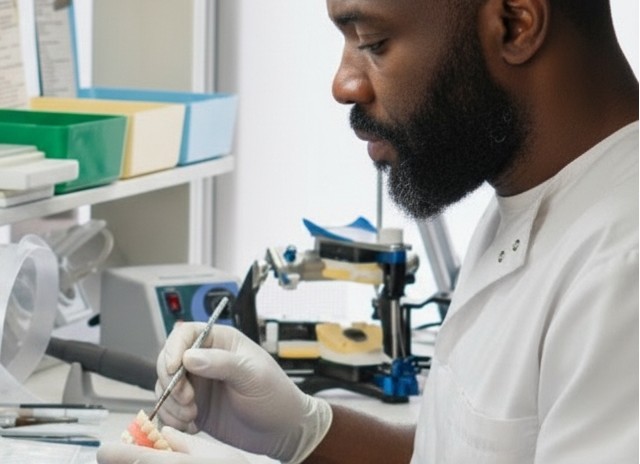
Immediate dentures after tooth extraction allow you to leave with replacement teeth rather than waiting for your gums to heal without a smile. At Quality Dentures & Implants in Jacksonville, FL, immediate dentures are prepared before extraction and fitted after the teeth are removed, supporting your appearance and everyday function throughout the healing period.
The Short Version
Immediate dentures are inserted soon after tooth extraction, but their fit will change as swelling reduces and the gums heal. Tenderness, increased saliva and temporary difficulty eating or speaking can occur. Follow-up appointments and adjustments are an expected part of the first month.
What Are Immediate Dentures?
Immediate dentures, sometimes called same-day dentures, are removable replacement teeth prepared before natural teeth are extracted.
Because the dental laboratory cannot try the finished denture in a mouth where the teeth are still present, the initial fit may require refinement after the extractions. The gums and jaw also change considerably during healing.
Immediate dentures provide several important benefits:
- You do not have to go through the early healing period without teeth.
- They help support your facial appearance.
- They can assist with speech and eating as you adapt.
- They may help protect the extraction sites during early healing.
- They provide a guide for planning future denture adjustments or replacement.
They are not necessarily your final dentures. Depending on healing and your treatment plan, the immediate denture may later be relined, rebased or replaced.
What Happens on Extraction Day?
Once the planned teeth have been removed, the immediate denture is carefully positioned.
It may feel firm or bulky at first. Local anaesthetic can also make it difficult to judge the fit immediately after treatment.
Your dental team will provide instructions covering:
- How long to keep the denture in place
- When and how to remove it
- Managing discomfort and swelling
- What foods to choose
- Cleaning your mouth and denture
- Any prescribed or recommended medication
- When to return for your first review
Follow the instructions provided specifically for you. General online advice should never replace your individual post-extraction directions.
The First 24 Hours
During the first day, the immediate denture may act like a protective covering over the extraction areas.
Some blood-tinged saliva can occur. Swelling, tenderness and pressure are also common after extractions, although each patient’s experience is different.
Do not remove the denture earlier than instructed. Swelling can make reinsertion difficult if it is removed too soon.
Choose cool or lukewarm liquids and very soft foods. Avoid using straws, forceful rinsing, smoking and other actions your dentist advises against because they may disturb the healing areas.
Rest with your head elevated and take medication only as directed by your dentist or healthcare provider.
Days 2 to 3: Swelling and Tenderness
Swelling often becomes more noticeable during the early days before it begins to settle.
As the anesthetic wears off, you may become more aware of pressure points beneath the denture. Some areas may feel tender because the denture is resting over recently treated tissues.
Your denture may also feel unfamiliar when speaking or swallowing. This does not automatically mean something is wrong.
However, sharp pain, severe rubbing or a denture that cannot be positioned correctly should be reported to the dental team. A small professional adjustment can often relieve a specific pressure area.
Days 4 to 7: Beginning to Adapt
During the remainder of the first week, many patients gradually become more comfortable inserting, removing and wearing their immediate dentures.
Speech may begin to feel more natural with practice. Reading aloud slowly can help your tongue adapt to the position of the new teeth.
Continue choosing foods that require minimal chewing, such as:
- Scrambled eggs
- Yoghurt
- Mashed vegetables
- Smooth soups that are not too hot
- Soft fish
- Pasta
- Oatmeal
- Other foods recommended by your dental team
Cut food into small pieces and chew slowly. Avoid testing the denture with hard, sticky or crunchy foods before the extraction areas are ready.
Week 2: The Fit May Begin to Change
As swelling reduces, the denture may start to feel different.
A denture that felt tight immediately after extraction can become looser as the gums heal and change shape. This is a normal reason for follow-up appointments after immediate dentures are fitted.
Common concerns during this stage include:
- Slight movement while eating
- Food becoming trapped beneath the denture
- New pressure areas
- Changes in the bite
- Increased reliance on the cheeks or tongue for stability
- Difficulty chewing certain foods
Do not file, bend or reshape the denture yourself. Adjusting the wrong area can damage it or create a new bite problem.
Weeks 3 to 4: Building Confidence
By the third and fourth weeks, many patients are becoming more confident with their dentures, although healing is still continuing.
Speaking and eating may feel easier, and early tenderness should generally be improving. The denture fit may continue to change as the extraction sites heal.
Some patients will require more than one adjustment during the first month. This does not mean the denture has failed. It reflects the fact that it was made for a mouth that is now changing through healing.
Persistent pain, repeated sore spots or significant instability should be assessed rather than accepted as part of denture life.
Immediate Dentures vs Conventional Dentures
| Feature | Immediate Dentures | Conventional Dentures |
|---|---|---|
| When they are made | Before the planned extractions | After initial healing |
| When they are fitted | Soon after teeth are removed | Once the gums have healed sufficiently |
| Time without teeth | Usually minimised | A healing period without the final denture may be required |
| Initial fit | Changes as swelling and gums settle | Made to fit a more healed mouth |
| Adjustments | Common during healing | May still require adjustments |
| Future treatment | May need a reline, rebase or replacement | Maintained and adjusted as the mouth changes |
The best approach depends on your dental condition, treatment goals and feelings about being without teeth during healing.
Why Do Immediate Dentures Need Adjustments?
Immediate dentures are made using impressions, measurements and estimates taken before the teeth are removed.
After extraction, several changes take place:
- Swelling develops and then subsides.
- Extraction sites close and heal.
- Gum tissue changes shape.
- The supporting bone begins to remodel.
- Your muscles learn to control the denture.
- Your bite and chewing pattern adapt.
An adjustment corrects a specific area causing pressure or affecting the bite. A reline reshapes the surface that rests against the gums to improve the overall fit.
The timing of a reline or replacement depends on how your mouth heals and the condition of the immediate denture.
How to Care for Your Mouth and Immediate Dentures
Step 1: Follow Your Personal Instructions
Wear and remove the dentures according to the directions provided after your procedure.
Step 2: Keep the Dentures Clean
Once you have been told it is safe to remove them, clean the dentures gently using a soft denture brush and suitable non-abrasive cleanser.
Step 3: Clean Your Mouth Carefully
Follow the dental team’s instructions for cleaning the gums, tongue and healing areas. Avoid vigorous brushing or rinsing directly over fresh extraction sites.
Step 4: Progress Foods Gradually
Begin with soft foods and introduce firmer textures only as comfort and healing allow.
Step 5: Attend Follow-Up Appointments
Reviews allow the team to monitor healing, relieve pressure points, check the bite and determine whether further adjustments are needed.
When Should You Contact the Dental Team?
Contact Quality Dentures & Implants if you experience:
- Pain that is severe, worsening or not controlled as expected
- Bleeding that continues despite following your instructions
- Swelling that becomes worse rather than improving
- Fever or other signs of infection
- A denture that creates sharp or persistent sores
- A damaged, cracked or broken denture
- An inability to insert or remove the denture as instructed
- Numbness that persists longer than expected
Seek urgent medical assistance if you experience difficulty breathing or swallowing, severe facial swelling or another potentially serious reaction.
Move Through Healing With the Right Support
Immediate dentures can protect your confidence during a period of significant change, but they are not simply fitted and forgotten.
Quality Dentures & Implants supports patients throughout Jacksonville, Orange Park and surrounding communities with tooth extractions, immediate dentures, follow-up adjustments, relines and replacement options.
If you are preparing for extractions or having difficulty with an immediate denture, request an appointment for personalised advice and care.
Frequently Asked Questions
Are immediate dentures fitted on the same day as tooth extraction?
Immediate dentures are prepared before treatment and generally inserted soon after the planned teeth are extracted. Your dentist will confirm whether this approach is suitable for you.
How long should I wear immediate dentures after extraction?
Follow the individual instructions provided by your dental team. You may initially be asked to keep the denture in place for a specified period before removing it for cleaning.
Is it normal for immediate dentures to become loose?
Yes. As swelling reduces and the gums and jawbone change during healing, an immediate denture can become looser. Adjustments or a reline may be needed.
What can I eat during the first week with immediate dentures?
Begin with soft foods that require minimal chewing. Cut food into small pieces, chew slowly and avoid hard, sticky or crunchy foods until your dental team advises otherwise.
Will I need new dentures after my gums heal?
Not always. Some immediate dentures can be relined or rebased, while others may eventually need replacement. The decision depends on the fit, bite, denture condition and extent of healing changes.
When should I call the dentist after receiving immediate dentures?
Contact the dental team if you have worsening pain or swelling, ongoing bleeding, fever, persistent sores, denture damage or difficulty wearing the denture. Seek urgent help for breathing or swallowing difficulties.